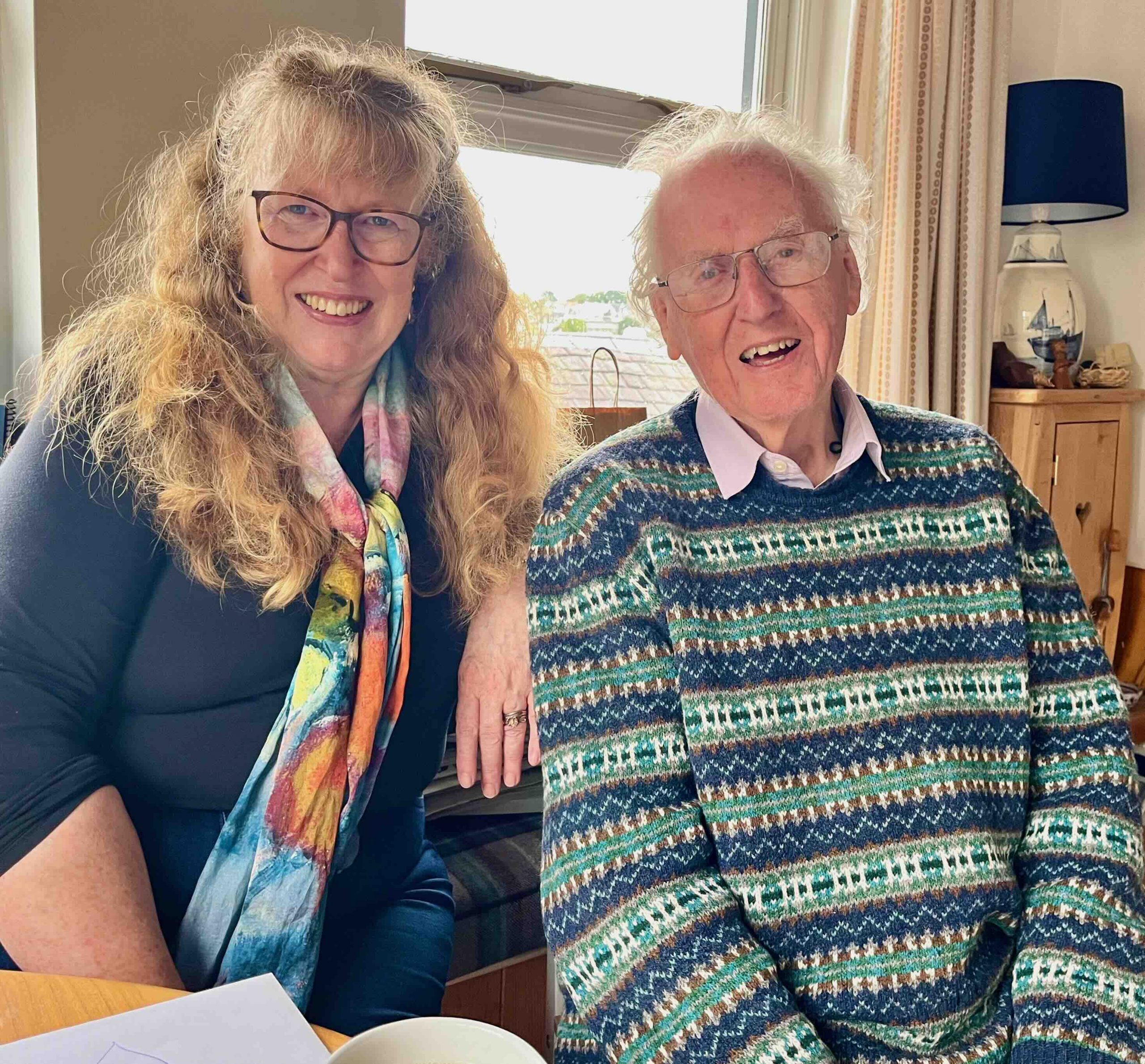
My father passed away this spring. Common sense tells me we all lose our parents at some point however this makes the moment no less heart-breaking when that someone means the world to us. This last month when I barely left his side, we talked about so many things…and so much left to say. He led a wonderful life and left the world a better place. In time I shall post a link to an obituary for those of you interested.
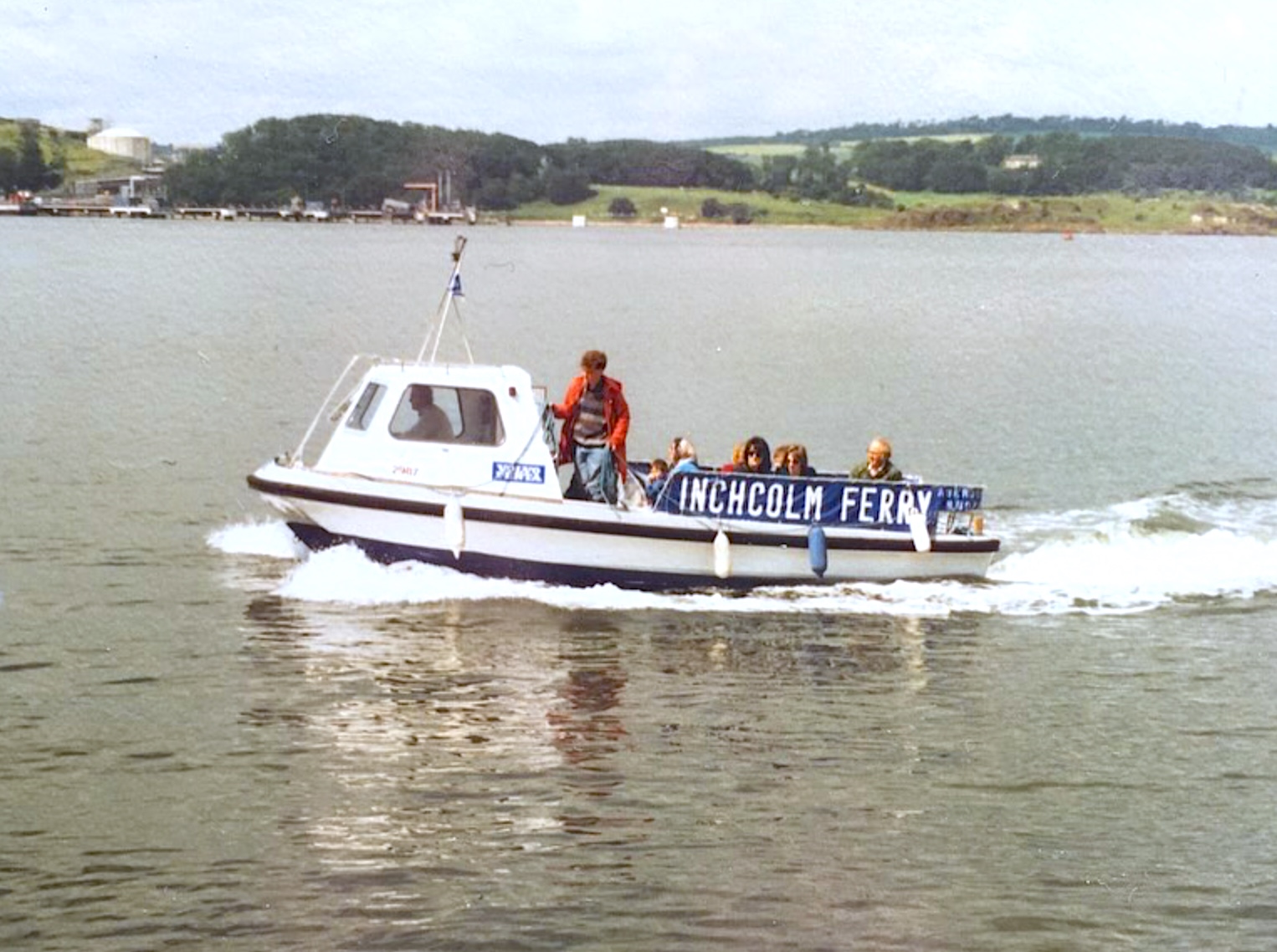
He loved Scotland: its friendly folk, culture and sense of humour, music, nature, wildlife, unpolluted air, loch and glens. He climbed mountains in his youth, ran the Inchcolm Ferry in his retirement and built Dougal’s Road but that’s another story! He listened intently when I discussed industrial-scale farming issues and their detrimental effect on our precious country and supported me all the way.
He followed the farmed salmon debate and was shocked by the intransigence of the powers that be to listen to reason – we think they’re feart it will damage the economy however this absolutely need not be the case. With a brave stance and lateral thinking, other more sustainable jobs can be created and Scotland will be respected for taking an environmental stand on open sea aquaculture: Sweden has banned it and Canada, New Zealand and others are phasing it out…. which brings me to my newsletter… prompted by a conversation at Dad’s bedside, and published under the title proposed by him, “Harmed Salmon.” I dedicate this newsletter to him.
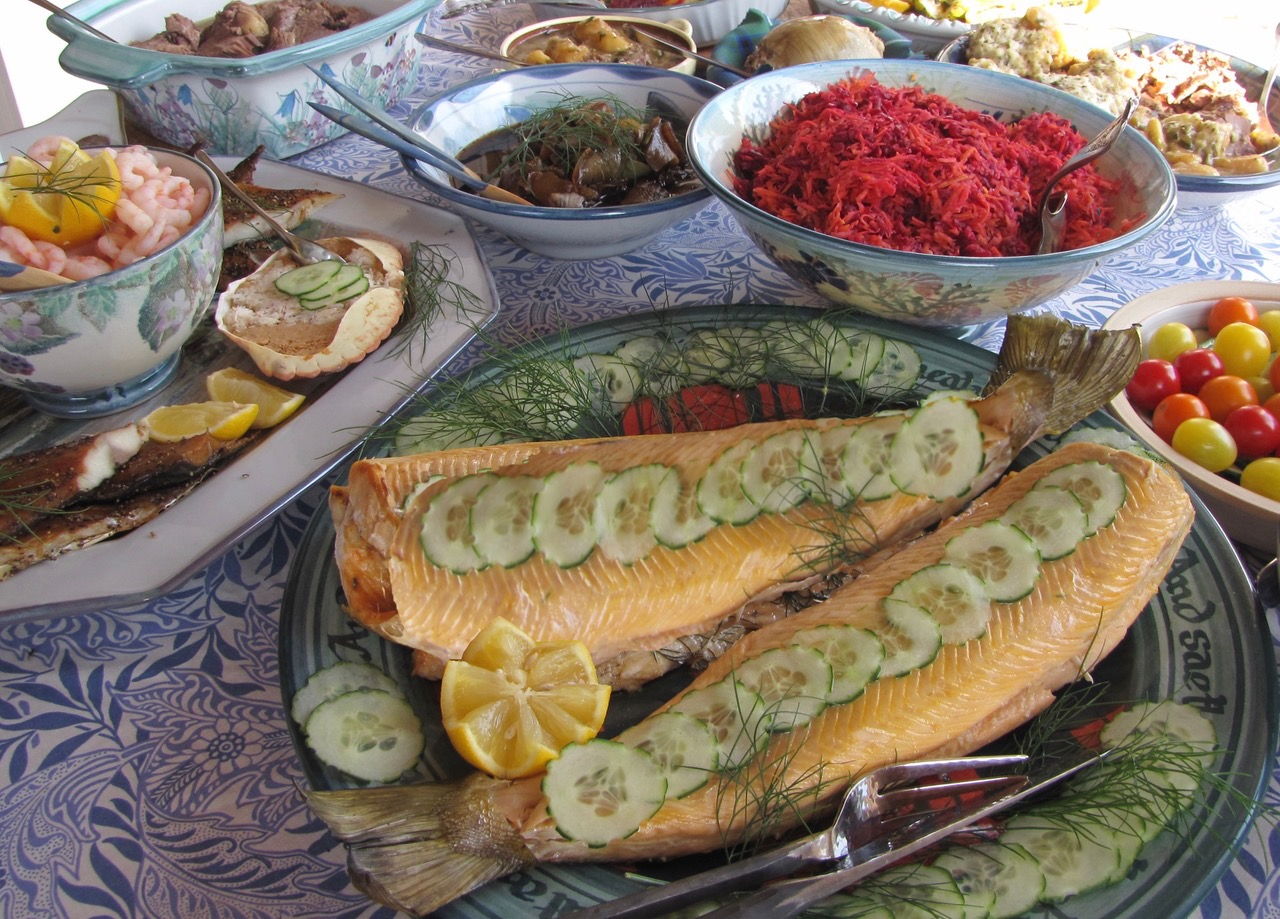
Turn back the clock to the 1980’s. A time when the aquaculture of modern times (not the historic carp pools of Bohemia in harmony with nature) was in its infancy. I was a youthful food stylist and cook, professionally preparing platters for small functions and creating recipes for promoting Scottish produce. Among my regular commissions was dressed salmon, a task I enjoyed – artistic and edible. At catering college, I had elected to study wild salmon for my final year dissertation and travelled to Aberdeenshire and the Solway to photograph the salmon nets, now long gone. I arranged a blind tasting with farmed and wild salmon and, even then, journalists and chefs noted distinct differences, the quality of the former being noticeably inferior in both texture and flavour. Like frogs in warm water, we had no idea of the environmental disaster lying ahead. Incidentally, the farmed salmon industry now has the nerve to rename its PGI status as Scottish Salmon – if they are so wonderful, why hide the fact they are farmed? Sad to say the vast majority of Scots no longer know the flavour of wild salmon as it is endangered and unavailable.
Now there is indisputable evidence of the disastrous effects of industrial-scale open sea aquaculture: disease-ridden fish, high concentrations of chemicals, wrasse issues, emptying seas of herring and other wild fish in the food chain for fish feed, endangering wild salmon populations through pollution and weakening their genetics due to cross-breeding with escapees. The environmental damage is apocalyptic, the mortality rate on these ‘farms’ beyond our ken. In short, they have no redeeming features.
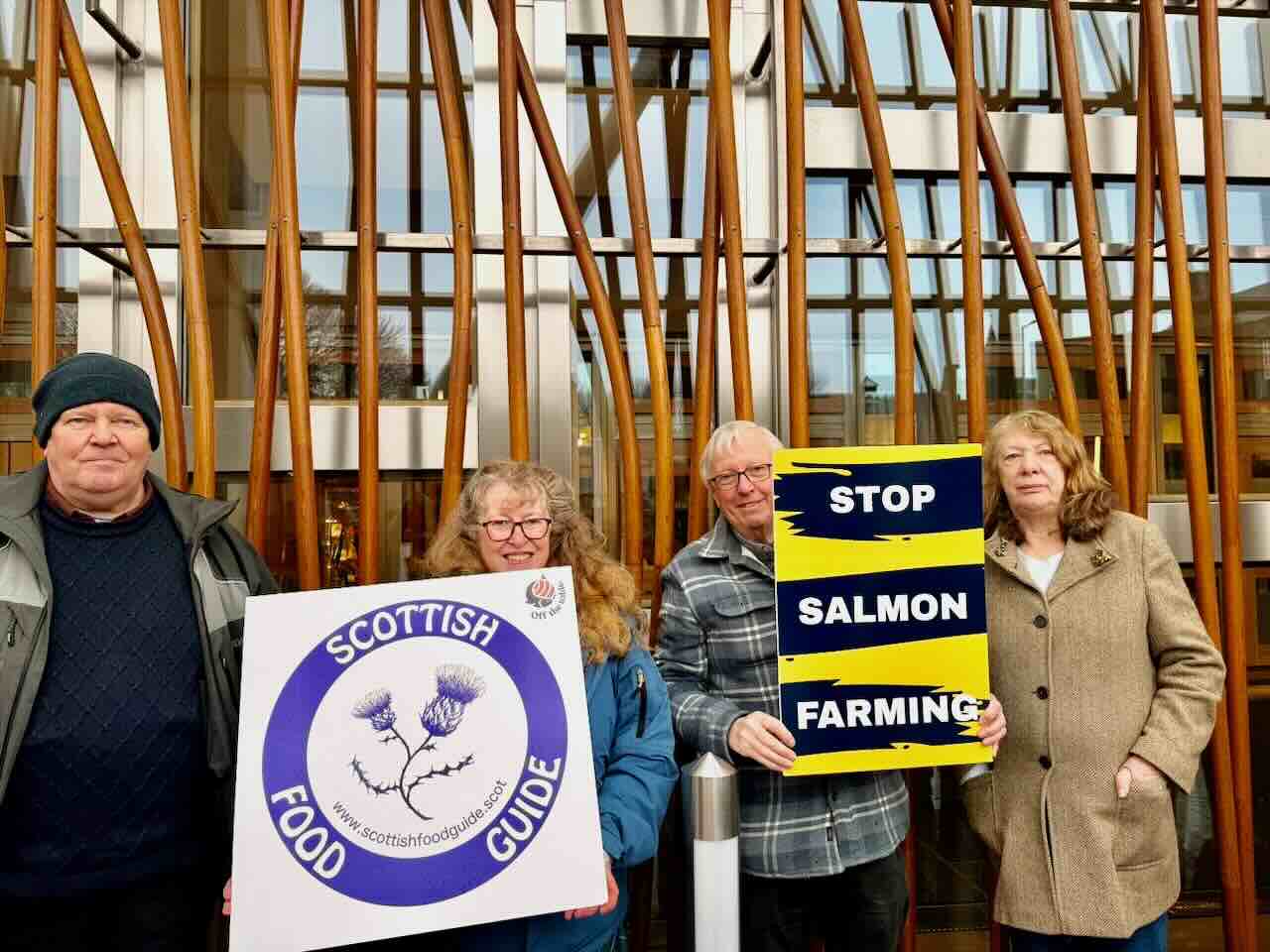
Earlier this year, (when all the family, including Dad, was oblivious to what lay ahead) Bosse and I attended the Scottish Parliament’s Rural Affairs and Islands Committee who at the time were reviewing whether the Scottish Government had done sufficient to regulate the multinational-owned salmon farm companies. There was quite a crowd outside supporting the ‘Off The Table’ campaign – sufficient to book out the entire public seating of the large meeting room within. Beside us were Walter and Brenda Mowat, friends from Slow Food Edinburgh, along with fishing associations, hospitality industry, environmentalists, journalists, writers, nutritionists and many more. Incidentally Slow Food International stands totally against salmon farming.
As regular attendees at Cross Party Groups on Rural Affairs and Food, we are no strangers to Holyrood however it was hard to restrain oneself (although I behaved impeccably) when one felt some of the questioning a little tame and many of the answers avoiding the issues. Nelson’s eye comes to mind. Afterwards we all reconvened at the Scottish Storytelling Centre to review the morning over a bite of tasty haggis and neeps. It was a very worthwhile day and a further step towards raising awareness of the shocking plight of the King of Fish.
I consider – and indeed define myself – as a cook, food writer and campaigner for local high-quality produce, advocating culinary skills, food heritage and gastronomy, supporting ethical food tourism and offering sustainable solutions for food production. In short, leaving the planet in better shape than when I arrived, if that is not too grandiose. I stand by that and so did my father.
I regularly campaign: arranging a petition at Terra Madre to support local abattoirs; oft-times speaking up for artisan cheesemakers; joining voices on the plight of scallop divers v dredgers, and publicly taking on cheap meat imports v supporting our farmers as early as the late 80’s when frankly it felt a little lonely out there. I have been subjected to verbal abuse on several occasions however I shall ne’er be deterred. Back at the Parliament, my mind returned to my student days and the last time I actually paraded with a placard. Gordon Brown was visiting a linoleum factory in Kirkcaldy so a bunch of us piled into a borrowed VW camper van and joined the protest against Moss Morran (not that that did much good).
I am mindful some readers may not feel as strongly as we do and perhaps change takes a little more time; considering alternative dishes and weighing up other considerations but I am convinced the day is nigh when there will be a tipping point as an increasing number of caring consumers have an epiphany on the realities of this mega-industry on our shores.